

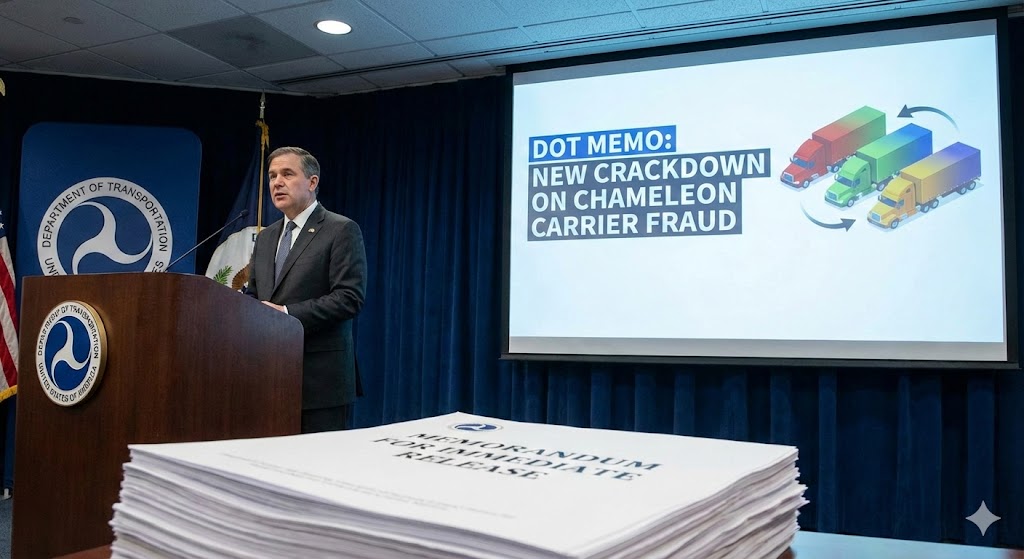
The U.S. Department of Transportation has revealed a groundbreaking initiative to crack down on “chameleon carriers” through a leaked internal memo.
These carriers are notorious for repeatedly shutting down and reopening under new identities to evade detection and enforcement, posing a threat to road safety and legitimate businesses in the trucking industry.
The memo proposes a comprehensive revamp of the current identification system for high-risk carriers. By introducing a severity scoring mechanism that analyzes registration data and operational behavior, the DOT aims to target fraudulent operators effectively. If implemented, these measures could bring swift changes to the freight sector.
Describing chameleon carriers as entities that exploit loopholes in the registration system to conceal their past violations and resume operations unnoticed, the memo emphasizes the urgent need to address this long-standing issue. By establishing a data-driven severity matrix, regulators intend to expose carriers engaging in deceptive practices and prioritize audits and enforcement actions against them.
The practices of chameleon carriers involve closing down and swiftly rebranding under new names while maintaining the same fleet, personnel, and unsafe practices. These operators aim to circumvent accountability rather than sustain legitimate operations, making it imperative for authorities to intervene promptly.
Utilizing advanced data analysis, the DOT has identified alarming trends among high-risk carriers, such as frequent DOT number changes, shared addresses, and sudden equipment modifications following violations. By leveraging this information to assign risk scores, regulators can proactively target fraudulent operators and prevent them from endangering public safety and disrupting the industry.
In a bid to protect compliant carriers and uphold industry standards, the memo suggests a proactive approach centered on data collection, analysis, and targeted enforcement. By scrutinizing key data points associated with fraudulent activities, authorities can swiftly identify and address carriers with suspicious behavior, ensuring a fair and secure operating environment for all stakeholders.
For small carriers committed to operating ethically, these proposed measures offer a shield against unfair competition and safety risks. While the heightened registration scrutiny may introduce additional verification steps and potential delays, it ultimately aims to strengthen regulatory oversight and weed out bad actors without impeding legitimate businesses.
About The Author





Leave a Reply